


Kurdish political movements in Iran are both less visible and more complex in structure compared to other Kurdish regions in the Middle East. The primary reason for this is the systematic repressive policies implemented by the Islamic Republic of Iran following 1979; these policies have prevented the institutionalization of Kurdish political organizations within the country and have largely pushed the movements beyond its borders. Therefore, understanding the political movements in Iran and the regions defined by Kurds as “Iranian Kurdistan” or Rojhilat in Kurdish requires not only examining the organizations but also evaluating historical ruptures, sociological structures, and regional geopolitics together.
POLITICAL RISK ANALYSIS,
On February 22, a notable political development occurred among Iran-based Kurdish parties. The Kurdistan Democratic Party – Iran (KDP-I), the Kurdistan Freedom Party (PAK), the Kurdistan Free Life Party (PJAK), the Iranian Kurdistan Struggle Organization (Xebat), the Kurdistan Workers’ Union (Komela), and the Kurdistan Komala Party of Iran, which later joined the alliance, announced a new agreement under the name “Alliance of Political Forces of Iranian Kurdistan.” The parties announced that they had decided to develop a joint political and military response against the Iranian regime.
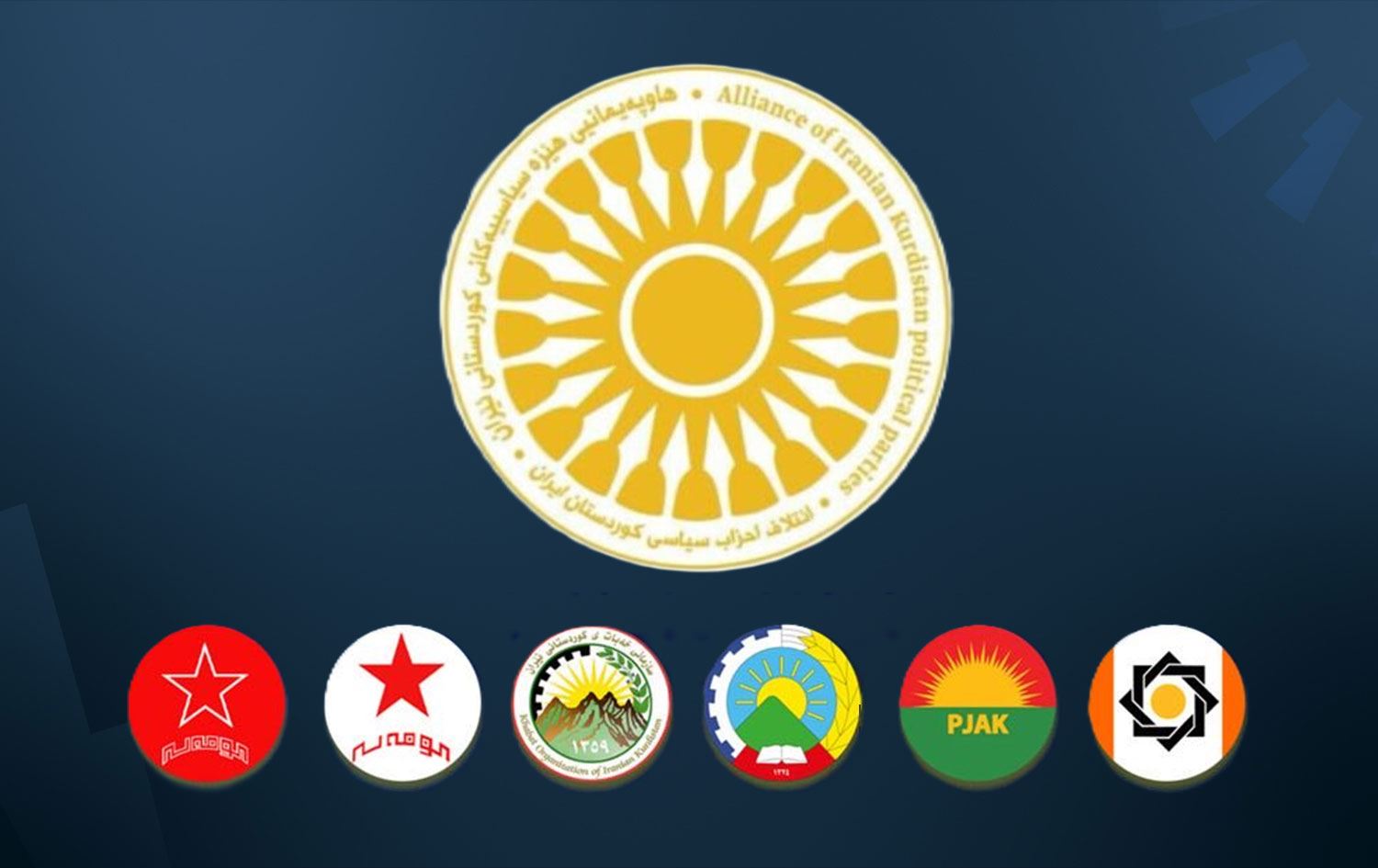
Six Iran-based Kurdish parties and the alliance logo. Photo/ Rûdaw
On February 28, tensions that began with large-scale airstrikes by Israel and the U.S. targeting various cities in Iran, as well as Iran’s ballistic missile strikes on its regional bases and Israeli territory, escalated into a regional military conflict. Following these developments, attention turned to the Kurdish parties playing a leading role among opposition groups in Iran. So, who are these Iran-based Kurdish parties, and what is their historical background?
Geographical and demographic framework
Iranian Kurdish territory spans an area extending from the Turkish border in the north to the Iraqi Kurdistan Regional Government (IKRG) in the south, bordered by Iraq and Turkey to the west and Iran’s interior regions to the east. The region does not constitute a single administrative unit; it is divided among West Azerbaijan, the Kurdistan Province (centered on Sanandaj/Sine), Kermanshah, and Ilam provinces.
According to unofficial figures, the Kurdish population generally ranges between 60–80 percent, though there is no ethnically homogeneous structure; Azeris, Persians, and other minorities live intermingled with Kurds. This situation prevents political mobilization from developing in a homogeneous manner along ethnic lines.
Linguistic and sectarian diversity is also notable. The Kurdish language, with its Kurmanci, Sorani, Kelhuri, and Leki dialects, along with Sunni, Shia, and Yarsan (Ehli Hak) religious groups, creates a multi-layered social structure. This diversity has a dual impact, contributing to both cultural richness and political fragmentation.
Historical Background: From State to Exile
The modern form of Kurdish political movements in Iran took shape in the mid-20th century. The “Mahabad Kurdistan Republic,” established in 1946, is one of the most significant historical references for the Kurdish national movement. Despite its short-lived existence, it served as an ideological and institutional foundation, particularly for the Kurdistan Democratic Party (KDP-I).
Following the 1979 Iranian Revolution, a serious conflict began between the Kurdish movements and the new regime. As a result of Ayatollah Khomeini’s fatwas and military operations targeting Kurdish regions, Kurdish political movements suffered a severe defeat in 1980–1981 and were rendered unable to sustain their presence within the country.
The regime’s harsh military and political repression against Kurds and their regions fundamentally altered the operational landscape of Kurdish parties in the country. During this process, many organizations lost the ability to conduct open political activities within Iran and were forced to retreat across the border, particularly to Iraqi Kurdistan. Thus, a structure emerged that has persisted to this day and is frequently defined in the literature as “politics in exile.”
A significant terminological difference also stands out among Iran-based Kurdish political structures. With the exception of PJAK, all Kurdish parties refer to their affiliated armed forces as “Peshmerga.” While this usage reflects the Kurds’ connection to their historical and symbolic heritage, PJAK has adopted a distinct military and organizational terminology aligned with its ideological line.
The Kurdistan Democratic Party of Iran (KDP-I) from 1945 to the present
The Kurdistan Democratic Party of Iran (KDP-I), one of the most established and influential actors in the Kurdish political movement in Iran, draws attention not only for its historical continuity but also for the recurring dynamics of internal division within the party. Founded in Mahabad in 1945, this organization has experienced three major splits over the course of nearly 80 years; however, the most striking feature of these splits is that the splinter factions have continued to conduct political activities under the same name. This situation is not merely an organizational crisis; it is also a concrete reflection of debates over legitimacy, representation, and ideological orientation.
The current leader of the KDP-I is Mustafa Hicri, and Halid Azizi, who makes statements on behalf of the party and serves as a key representative, is the party’s spokesperson.
Founding and Historical Legitimacy
The KDP-I was founded on August 16, 1945, in Mahabad under the leadership of Qazi Muhammad. The party became the founding force of the political entity declared shortly thereafter and known in the literature as the Mahabad Kurdistan Republic. However, this experiment lasted only one year; following the collapse of the republic in 1947, Qazi Muhammad was executed by the regime, and the party went underground.
This early period forms the foundation of the KDP-I’s historical legitimacy. The party positions itself not merely as a political organization, but also as the continuation of an unfinished state experiment.
First Split (1979–1980): Ideological Break
The first major split occurred following the Iranian Revolution, during the party’s 4th Congress.
During this period, serious debates arose regarding the party’s ideological orientation.
While a group of cadres leaned toward the Marxist-socialist line influenced by the Soviet Union, the party leadership preferred to follow a more pragmatic and nationalist course. This ideological tension led to the first major split within the organization.
This split served as a harbinger of the divisions the KDP-I would face in the coming years: the issue of balancing ideological orientation with national politics.
Second Split (1984–1985): Geopolitical and War Dynamics
The second major split occurred during the party’s 8th Congress, at an extremely critical juncture marked by the Iran-Iraq War.
The group that split from the party during this process formed a new structure under the name “KDP-I Revolutionary Leadership” (KDP-I Reveberatiya Shoreshkar). The most notable feature of this faction is the relationship it established with the People’s Mujahedeen in the struggle against the Iranian regime.
This split represents not only an ideological but also a strategic and geopolitical divergence. The question of which actors to ally with in the struggle against Iran has created a deep fault line within the party.
Third Split (2006): Debate Over Strategic and Political Programs
The third and most recent split emerged following the party’s 13th Congress. Two main factors lay at the root of this split:
the shift from a demand for “autonomy” to a demand for “federalism,” and personnel changes within the party leadership.
As a result of these developments, a group that split from the party announced at a press conference held in Erbil, the capital of the Kurdistan Regional Government (KRG), on December 16, 2006, that they had reorganized under the name “KDP” once again.
This situation brought to light one of the most striking phenomena in the history of the KDP-I: every faction that splits insists on retaining the same name to preserve its legitimacy.
“The Name Crisis” and the Struggle for Legitimacy
One of the most distinctive aspects of the splits within the KDP-I is that all the resulting factions continue to engage in politics under the same name. Unlike classic party splits, this has given rise to a “struggle over name and legacy.”
Each faction has defined itself as the “true KDP” and is attempting to claim the historical legitimacy stemming from the Kurdistan Republic of Mahabad. This has shifted organizational competition not only to an ideological but also to a symbolic plane.
This competition has also manifested itself in practical politics. For example, different KDP factions have adopted differing stances regarding elections in Iran: while one calls for a boycott, another may remain silent.
Politics in Exile and the Strategy of Armed Struggle
A common feature of all KDP-I factions is that they conduct their activities outside Iran, particularly in the Kurdistan Region of Iraq. This situation is a direct result of Iran’s repressive policies.
In 1992, following the assassination of KDP-I General Secretary Dr. Sadik Sherafkandi, the KDP-I announced that it was suspending armed struggle, taking regional balances into account. This decision was evaluated particularly within the context of the sensitivity of relations between Erbil and Tehran.
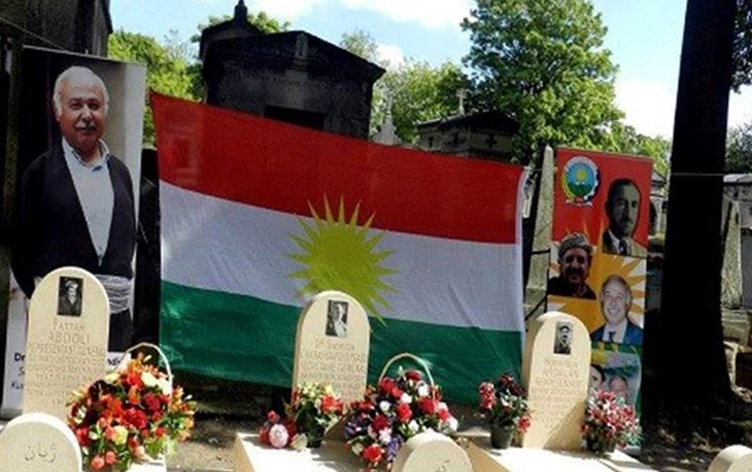
Kurdish leaders Kasimlo and Şereflendi, who were killed in the assassination
As a result, the divisions that had persisted within the party for many years were significantly resolved by a decision taken by the parties in 2022; following a split of approximately 16 years, the organization decided to reunite under the KDP-I umbrella. While this reunification does not imply that ideological differences have completely vanished, it has been regarded as a critical step toward establishing a common political line prioritizing national interests.
In the subsequent period, particularly the era of the fight against ISIS and the reshaping of power balances in Iraq, directly influenced the party’s strategic orientations. In this context, the KDP-I has once again placed the option of armed struggle on its agenda after a long hiatus and has focused on strengthening its presence on the ground. This transformation demonstrates that the party has adopted a flexible strategic approach capable of adapting to changing regional dynamics.
Kurdistan Workers’ Society (Komela)
Among the Kurdish political movements in Iran, Komela occupies a unique position in terms of its ideological depth and historical influence. However, this influence has been shaped not by organizational unity, but rather by divisions and transformations spanning many years. Understanding Komela today requires analyzing not a single organization, but a political tradition divided into multiple factions.
Komala emerged in 1969–1970 as a radical underground organization in Iran opposing the Shah regime under the rule of Mohammad Reza Pahlavi. The organization, whose full name was “Komelayi Şoreşgeri Zahmetkêşanî Kurdistan,” explicitly defined itself as a revolutionary workers’ movement.
Ideologically, it adhered to a Marxist–Leninist line. Initially, it was influenced by Maoist strategies. It adopted a revolution model based on peasants and workers. In this regard, unlike classical Kurdish national movements, Komala sought from the very beginning to build a class-based political line.
The power vacuum that emerged following the 1979 Iranian Revolution enabled Komala to emerge from the underground and become an overt political and military actor. It quickly established an effective organizational structure in Iranian Kurdistan.
Ideological Split: National or Class-Based?
The 1980s marked the most critical turning point for Komala. During this period, both the harsh military repression of the regime led by Ruhollah Khomeini and the ideological debates within the organization intensified.
The central debate was this: Should the Kurdish national struggle take priority? Or should the goal be a socialist revolution across Iran?
This division split Komala into two main factions: the Kurdish-focused faction; this wing centered on Kurdish national rights. By continuing the armed struggle, it withdrew from the Kurdistan Regional Government (KRG) and shifted toward a position closer to traditional Kurdish political movements.
The internationalist line: In 1983, a significant portion of Komala merged with the Communist Party of Iran. Following this merger, Komala adopted a broader revolutionary perspective, establishing an ideological framework that did not limit itself solely to the Kurds. This structure addressed the Kurdish issue as part of the class struggle and shifted toward an internationalist line.
The 2000s: The Institutionalization of Fragmentation
The crisis that the leftist ideology experienced on a global scale in the post-Cold War era also led to new searches within Komala. By the 2000s, Komala had ceased to be a single organization and had split into multiple factions.
The main structures that stand out today are as follows:
Komela – Iranian Communist Party Line
This structure represents the most classical Marxist line. It is the faction with the strictest ideology and the most clearly defined theoretical framework. Its base consists primarily of universities, left-wing intellectuals, and labor circles.
The party’s General Secretary is Reza Kaabi.
Komala – Abdullah Muhtedi Group
Led by Abdullah Muhtedi, this faction has adopted a more pragmatic and social democratic line. It prioritizes political and diplomatic activities over armed struggle. It is one of the most visible Komala factions on the international stage.
The Dynamics of Fragmentation
Several key factors underlie Komala’s ongoing fragmentation:
Ideological division: The tension between nationalism and internationalism formed the organization’s fundamental fault line.
Leadership competition: The emergence of different leadership figures accelerated organizational splits.
Exile politics: Conducting activities in Iraqi Kurdistan weakened the organization’s ties to its social base.
Global ideological transformation: The crisis experienced by leftist movements in the post-1990 era intensified the search for direction within Komala.
Komela’s current position
Led by current President Abdullah Mohtadi, Komela represents a political landscape composed of scattered factions rather than a single centralized structure. Its total influence in Iranian Kurdistan is estimated to be in the 10–20 percent range. The party has been particularly influential among university circles, the working class, and intellectual sectors.
Komela’s most significant contribution to the Kurdish political movement in Iran has been introducing a class-based perspective to the national struggle. It has also played a decisive role in shaping urban and intellectual Kurdish politics.
PJAK (Kurdistan Free Life Party)
Founded in 2004, PJAK is considered a structure ideologically rooted in the paradigm developed by Abdullah Öcalan and regionally linked to the PKK (the PKK dissolved itself on May 12, 2015, following Öcalan’s call).
PJAK is governed by a co-presidency system led by Emîr Kerîmî and Peyman Viyan. Unlike nationalist or classical left-wing lines such as the KDP-I and Komala, the party bases itself on Öcalan’s “democratic confederalism” paradigm. This approach encompasses elements such as local democracy, women’s freedom, an ecological society, and a multi-identity political structure.
The organization emerged in the regional vacuum created after the 2003 Iraq War; it advocated a model of local governance and social organization rather than a nation-state objective. With its co-presidency system and horizontal organizational structure, it has found particular resonance among young people and university circles.
Although PJAK’s armed elements are stationed along the Iraq–Iran border, a de facto ceasefire process with Iran began in 2012; since then, armed activities have decreased, and its political discourse has become more prominent.
The organization’s influence is concentrated primarily in border regions, university circles, and areas such as Hewraman. While its influence is estimated to be in the 25–30 percent range, this strength relies more on ideological and organizational capacity than on a broad mass base.
PJAK’s relationship with other Kurdish parties has long been distant and at times tense. In particular, the KDP-I has long regarded the organization as a “foreign-linked” entity. While ideological differences have deepened this distance, recent regional developments have brought about a limited rapprochement.
Consequently, PJAK positions itself not as a mainstream force in Iranian Kurdish politics, but rather as an alternative political model that centers on system criticism rather than nationalism. This approach has led to a continued cautious and distant stance, particularly among nationalist Kurdish circles.
PAK (Kurdistan Freedom Party)
It was first established in 1991 by Hussein Yezdanpenah under the name “Union of Kurdistan Revolutionaries.” At a congress held in October 2006, it officially adopted the name “Kurdistan Freedom Party (PAK).” This date is considered the beginning of PAK’s emergence as an active actor within the Iranian Kurdistan exile political scene.
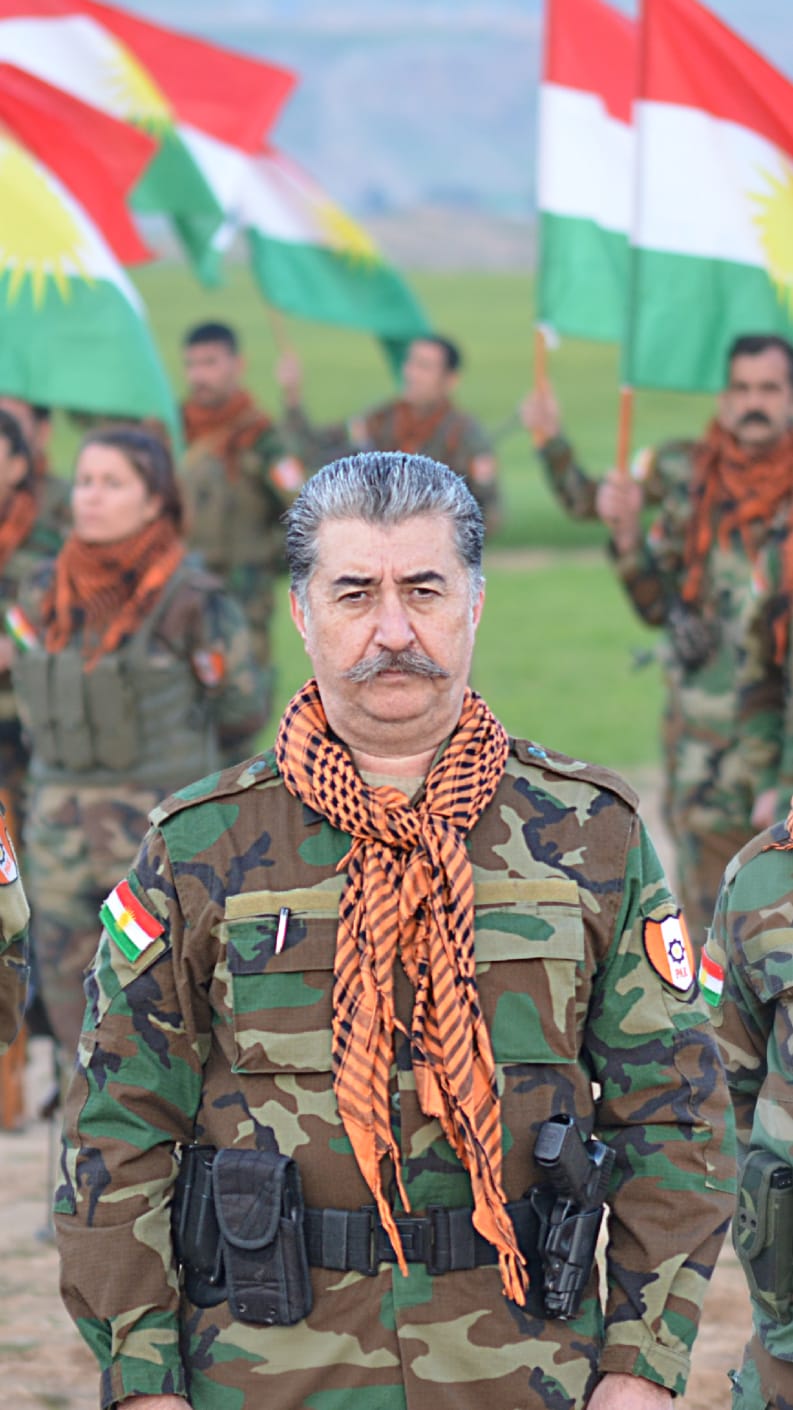
PAK Leader Hüseyin Yezdanpenah
PAK stands out among Iranian Kurdish parties as an organization known for both its armed and political activities. Ideologically, the party advocates for Kurdish nationalism and centers its platform on the concept of “Kurdish unity.” In this regard, PAK distinguishes itself from other parties based in Iranian Kurdistan. For example, while PJAK, Komala, or KDP-I primarily confine their struggles to the borders of Iranian Kurdistan, PAK has a broader perspective.
In its own words, the party is developing a “political vision encompassing all parts of Kurdistan.” For this reason, PAK represents a more inclusive and unified national line within regional Kurdish politics.
Organizational and military structure:
PAK’s military capacity is limited. However, its visibility, particularly through media and social media, is quite high. Party leader Yezdanpenah’s charismatic personality, his long mustache, his constant appearance in Peshmerga attire, and his active role on social media are the key factors driving PAK’s public recognition. Thanks to these characteristics, the party is able to exert influence within the Kurdish public sphere independently of its direct military or mass-based power. Its ability to resonate with young people is also a notable feature.
Ideology and political perspective:
PAK advocates for solidarity with other Kurdish regions and joint action. For example, PAK Peshmerga provided significant support to the Kurdistan Regional Government (KRG) in its fight against ISIS.
Despite PAK’s limited organizational capacity, its influence in the public sphere emerges as an ideological force thanks to the leader’s strong image and active communication strategy. This characteristic distinguishes the party from other parties in Iranian Kurdistan both ideologically and strategically.
Xebat / Sazmanî Xebat (Iranian Kurdistan Struggle Organization)
Xebat is a structure grounded in Islamic references that seeks to combine Sunni Islam with Kurdish national demands. This characteristic clearly distinguishes it from other Kurdish organizations aligned with secular or nationalist ideologies. The organization offers an ideological perspective that encompasses both religious and national struggle.
Its founding leader was killed by the Khomeini regime in 1980. Although it weakened due to severe repression against its leadership in the 1980s, it did not completely disintegrate and managed to continue its activities.
Like other Iran-based Kurdish parties, Xebat conducts its organizational activities by relocating its camps to the Kurdistan Region of Iraq.
The party’s General Secretary is Babaşeyh Hüseyin.
Its ideology, rooted in Islamic references, distinguishes it from other secular or nationalist parties. By combining Sunni Islam with the Kurdish political struggle, it develops a discourse that encompasses both religious and national dimensions. Like other parties, it maintains its organizational structure through camps, but ideologically adheres to a clear religious line.
A Multi-Layered Political Arena
Kurdish political movements in Iran do not exhibit a unified structure due to ideological diversity, historical fractures, and sociological fragmentation. However, this situation also lays the groundwork for the emergence of a multi-layered and flexible political arena.
The coalition initiatives emerging today can be viewed as a significant step toward overcoming this fragmented structure. Nevertheless, the fundamental factors that will determine the future of Kurds in Iran are not merely organizational alliances; they will include social mobilization, the demands of younger generations, and regional geopolitical balances.
This entire picture reveals that the Kurdish political movements in Iran possess a structure that is too multi-layered, fragmented, and dynamic to be reduced to a single line. Historically forced into exile, ideologically divided into different orientations, and organizationally fragmented, these movements have nonetheless managed to preserve their existence and adapt to changing conditions.
The recent initiative toward an alliance represents a significant declaration of intent to overcome the fragmentation that has persisted for many years. However, whether this quest for unity will evolve into a lasting and effective political line depends not only on inter-party consensus but also on its social resonance on the ground and the trajectory of regional developments.
In particular, the escalating tensions between Iran, Israel, and the U.S. are bringing the role of domestic opposition actors back into the spotlight, while the stance Kurdish parties adopt in this process is also of critical importance. In this context, these movements face a future shaped not only by their own internal dynamics but also by regional power balances, relations with Iraqi Kurdistan, and the stances of international actors.
In conclusion, the political structure in Iranian Kurdistan is neither entirely ineffective nor a sole decisive actor. However, under the right conditions, it continues to possess the potential to influence domestic opposition dynamics and play a role in regional developments. Therefore, understanding Kurdish political movements in Iran is of critical importance not only as an issue of identity but also for grasping how power balances in the Middle East are evolving.